Raised slow.
Fed right.
Ready when you are.
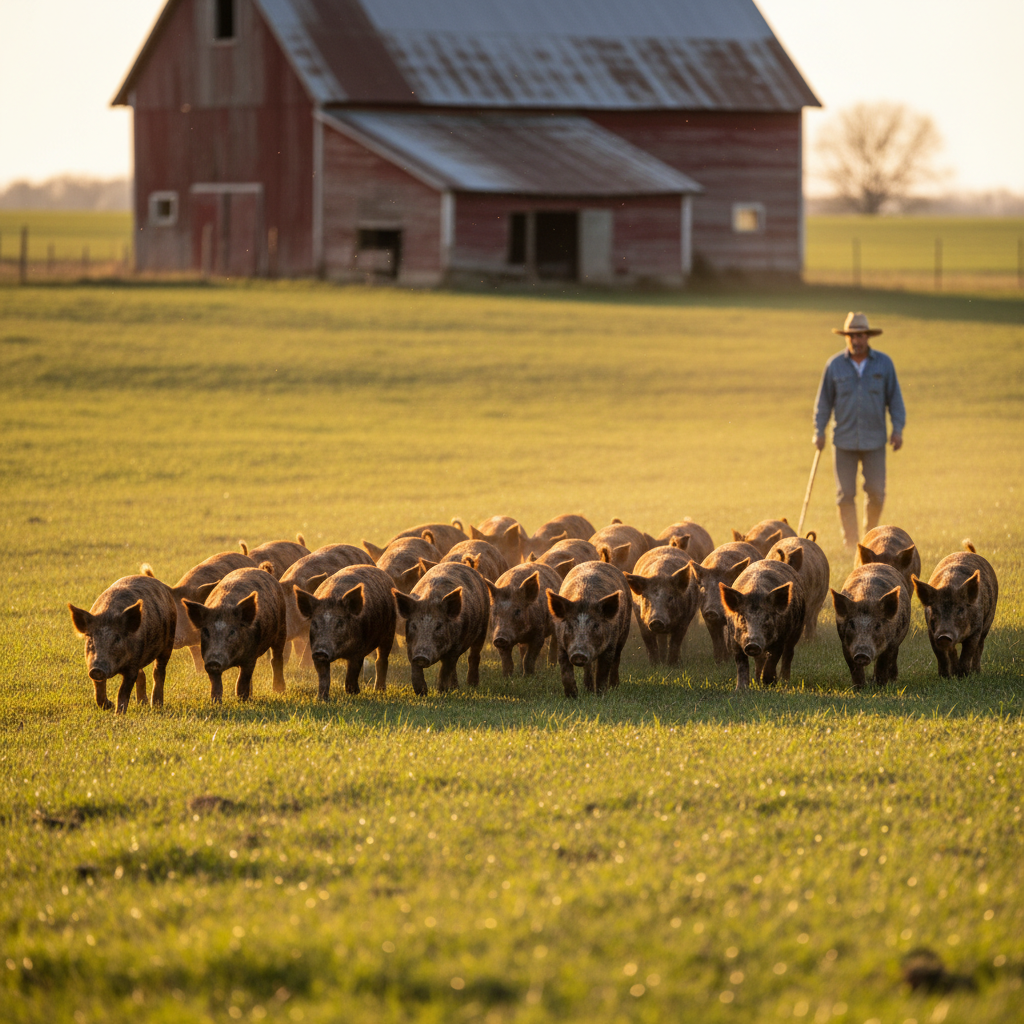
280 acres of red-clay pasture in the piedmont. Heritage breeds — Berkshire, Duroc, and Spotted — rooting through paddocks the way hogs are supposed to.
Birth to butcher block.
Nothing skipped.
Every scroll takes you one step further through the life of a Farrow hog. By the time you reach the CTA, you'll know exactly what you're buying — and why it costs what it costs.
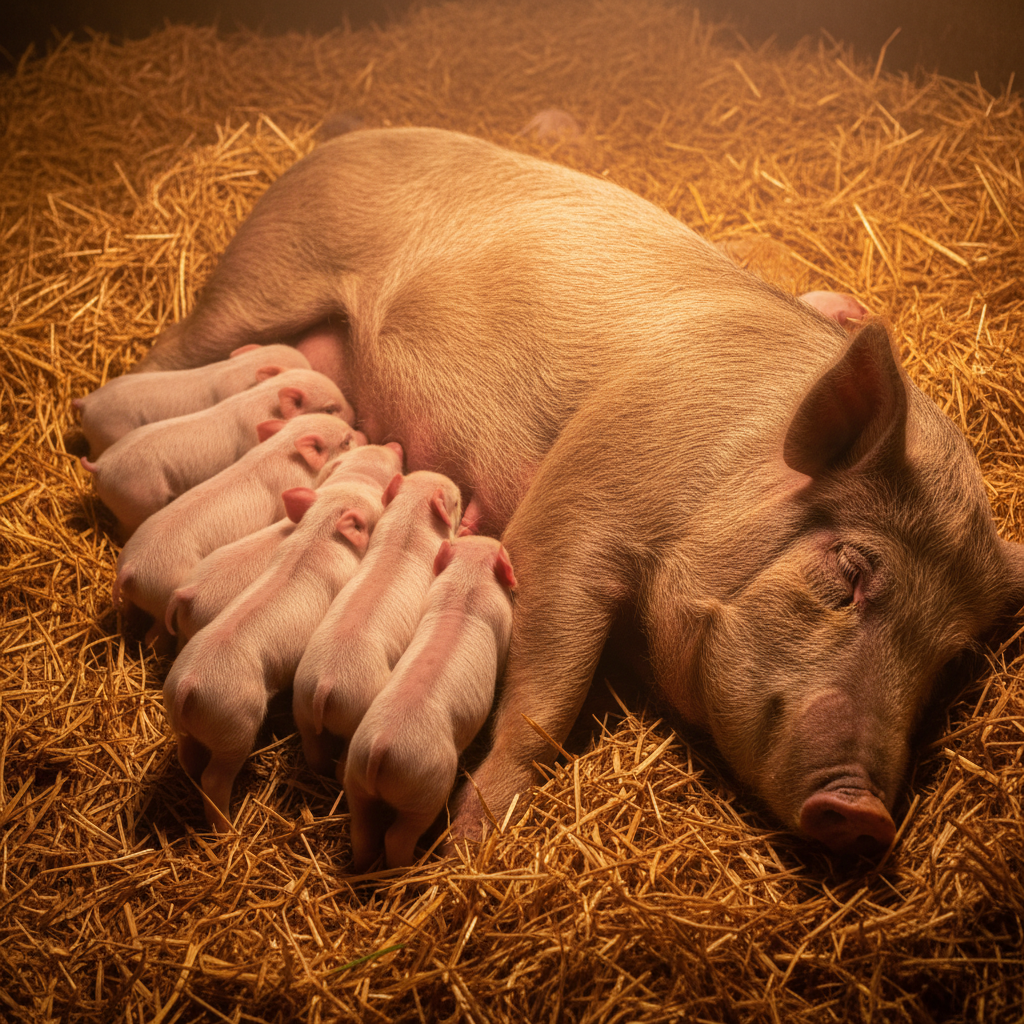
The Farrowing Barn
At first light, heat lamps warm the farrowing stalls. Sows farrow in deep straw, unmedicated. Piglets nurse for a full five weeks before weaning — no exceptions.
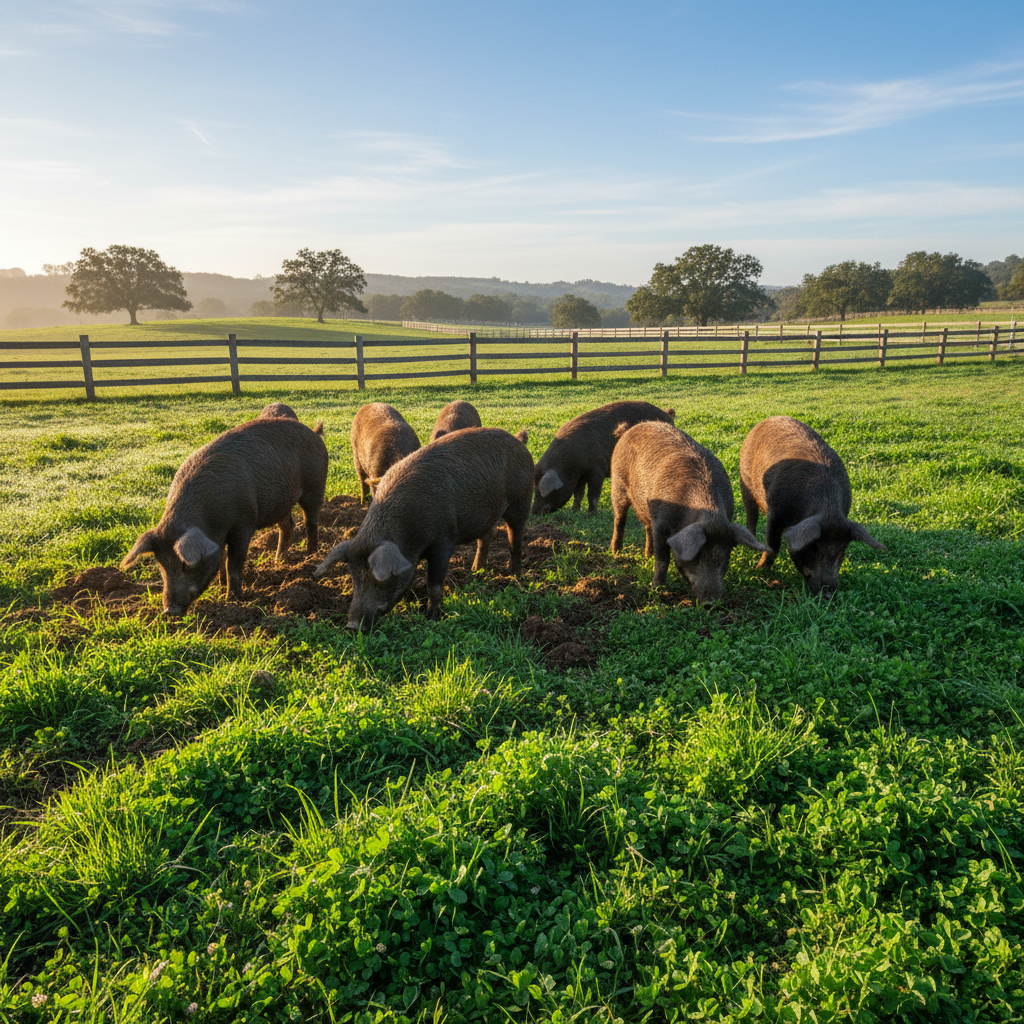
Open Pasture
By eight weeks, the paddock gates open. Hogs root, wallow, and forage through a 14-paddock rotation — always moving, always on fresh ground.
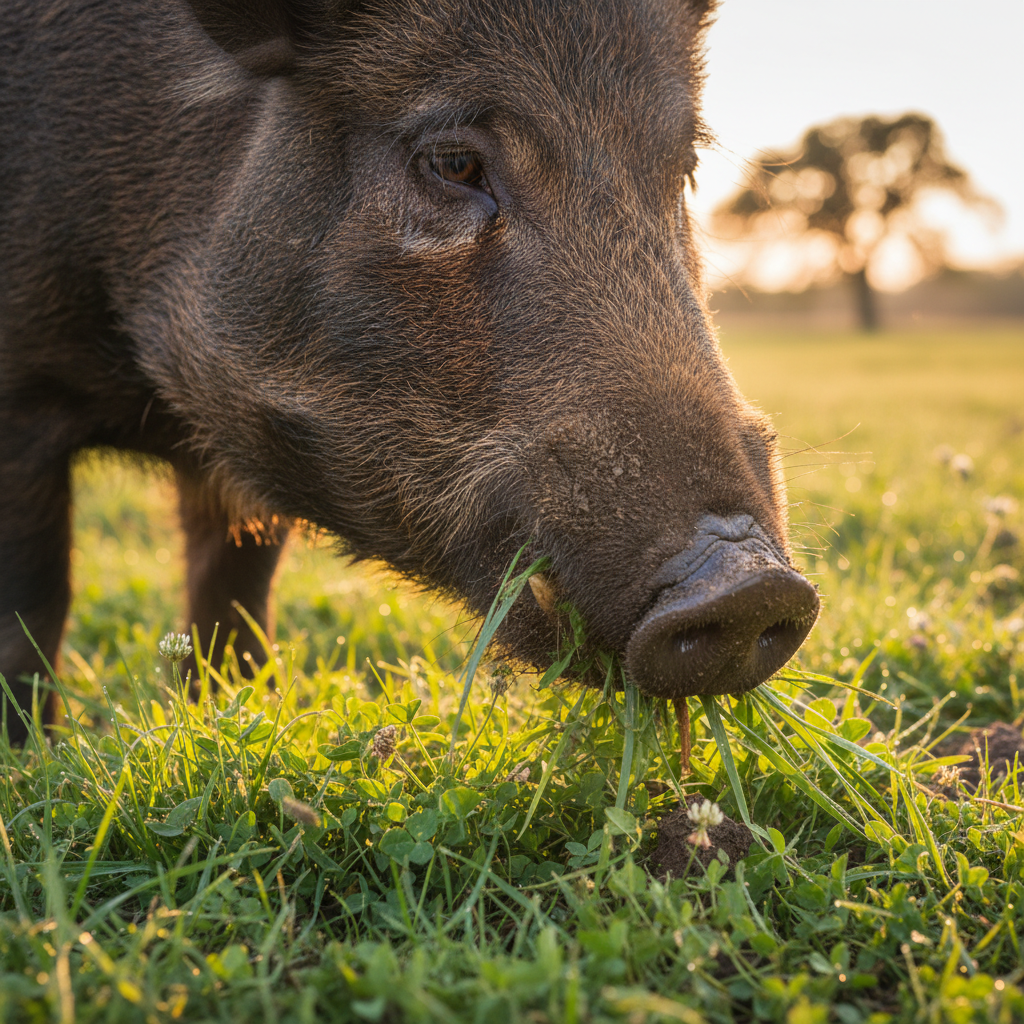
Forage & Supplement
The base diet is non-GMO corn and soybean grown on-farm. In season: spent grain from a local brewery, windfall apples, and turnip tops from the kitchen garden.
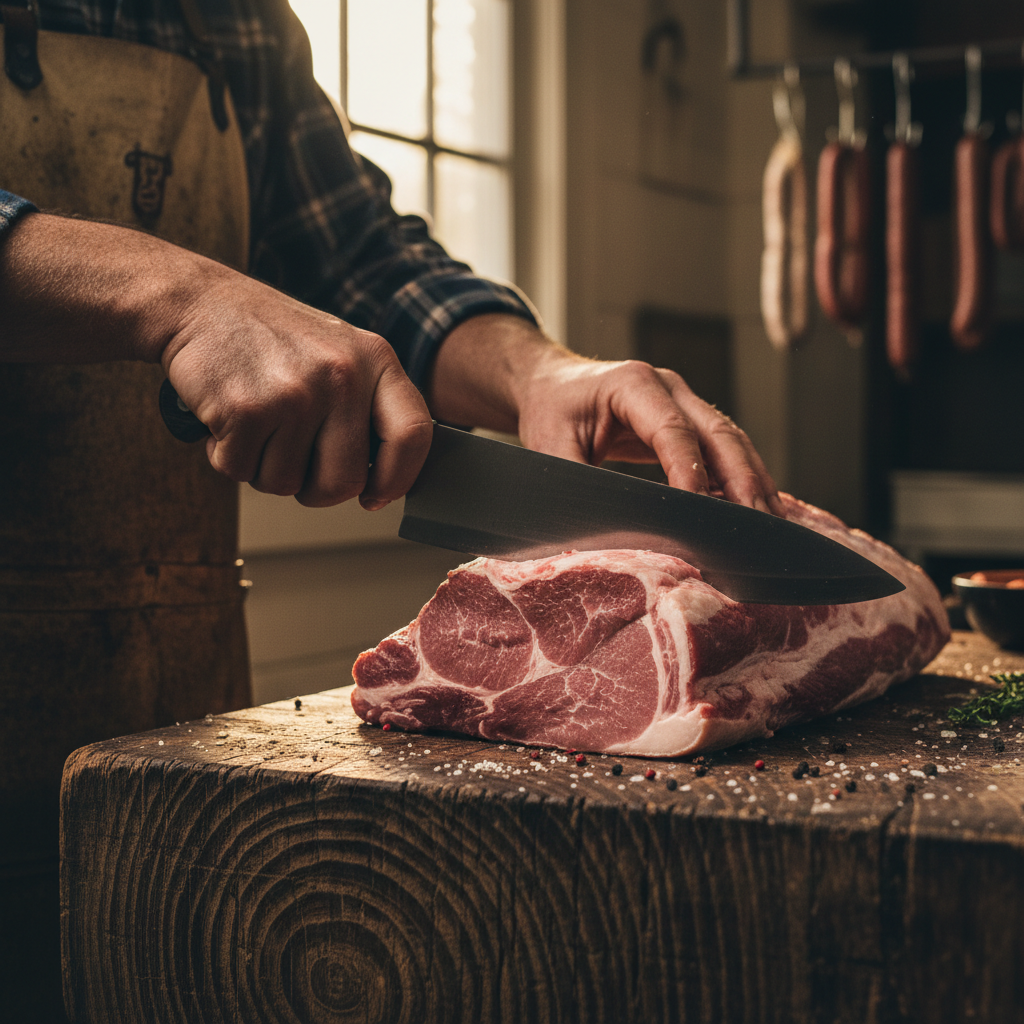
The Butcher Block
Hogs finish at 250–280 lbs live weight — 8 to 10 months on pasture. Processing happens 40 miles away at a USDA-inspected facility we've used for eleven years. Same crew, same protocols, every time.
Three breeds.
Each one deliberate.
We don't raise whatever the market wants. We raise three breeds chosen for flavor, fat structure, and temperament — and we've raised them long enough to know their personalities.
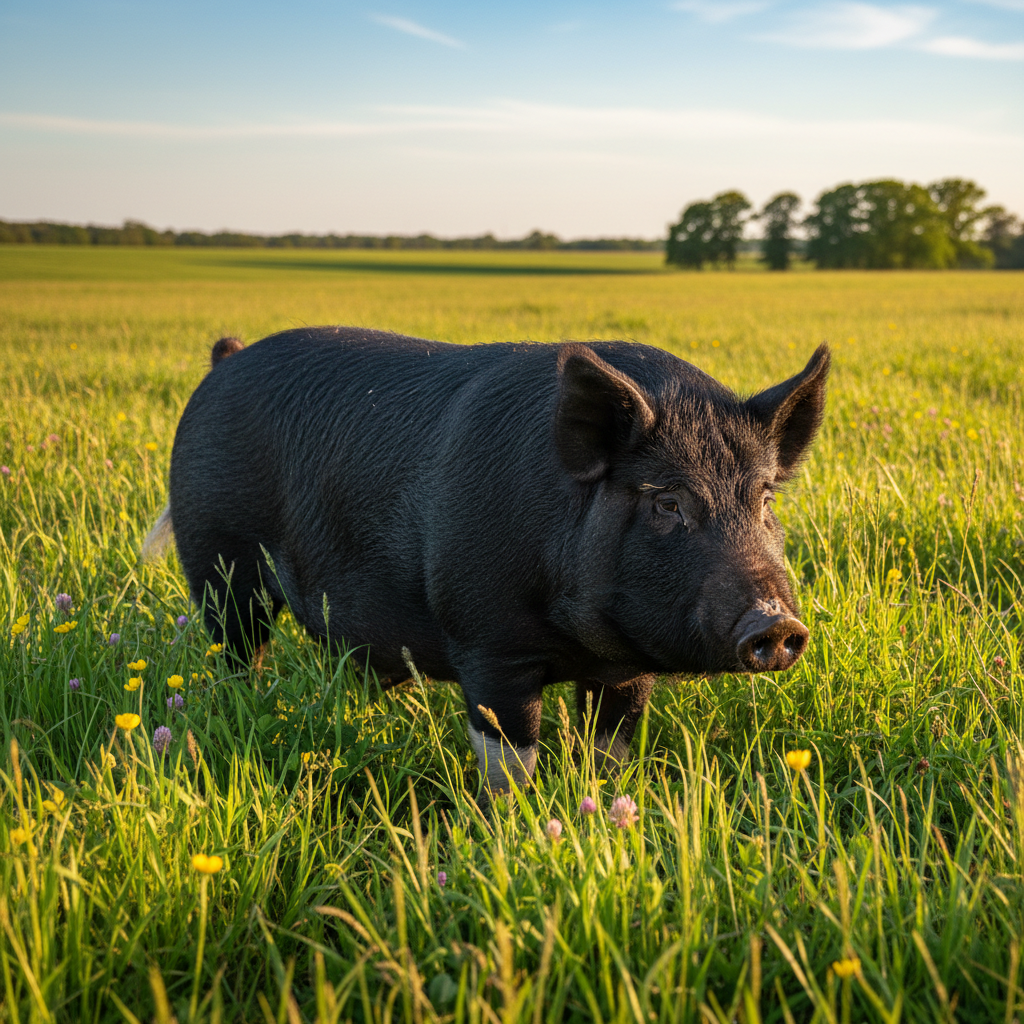
The wagyu of pork. Deep mahogany flesh, extraordinary intramuscular fat, and a flavor profile that holds up to hard sears and long braises equally. Our Berkshires finish on apple pomace and spent grain.
Quality Grades
Flavor Notes
Best Cuts
You should know
exactly what you're buying.
Commodity pork forgot what pork is supposed to taste like — and it forgot because it stopped caring what the animal ate, where it lived, and how it died. We haven't forgotten.
Feed Sourcing
Non-GMO corn and soybeans grown on our own fields or sourced from two farms within 30 miles. Supplemented seasonally with spent grain from Piedmont Brewing and apple pomace from a neighboring orchard.
Veterinary Protocol
Annual herd health reviews with Dr. Marcus Webb of Piedmont Livestock. No sub-therapeutic antibiotics, ever. Individual treatment if an animal is sick — and that animal is flagged, not sold as premium.
Processing Transparency
All hogs processed at Blue Ridge Meats, Chatham County — a USDA-inspected, family-owned facility. Same crew since 2013. Custom cut-and-wrap available. We can provide the USDA establishment number on request.
Land Stewardship
We've been on this land since 1978. Paddock rotation protects soil structure. We seed with native fescue and clover blends, test soil annually, and haven't used chemical fertilizer since 2009.
Heritage Breed Preservation
Berkshire, Duroc, and Spotted hogs represent less than 3% of pork raised in the United States today. Industrial pork converged on a single commodity breed — leaner, faster, cheaper. We breed for flavor and genetic diversity. Every hog we raise is a small argument against forgetting.
What's ready
right now.
Pork is seasonal. We don't keep inventory — we raise to order. The calendar below shows what's available, what's limited, and what to wait for.
Full harvest. Best selection of the year. Book your half-hog by October 15.
Cut Sheet Preview
Pricing tiers and delivery radius available in the full cut sheet PDF. Minimum wholesale order: 1 half-hog. Delivery within 80 miles of Chatham County, NC.
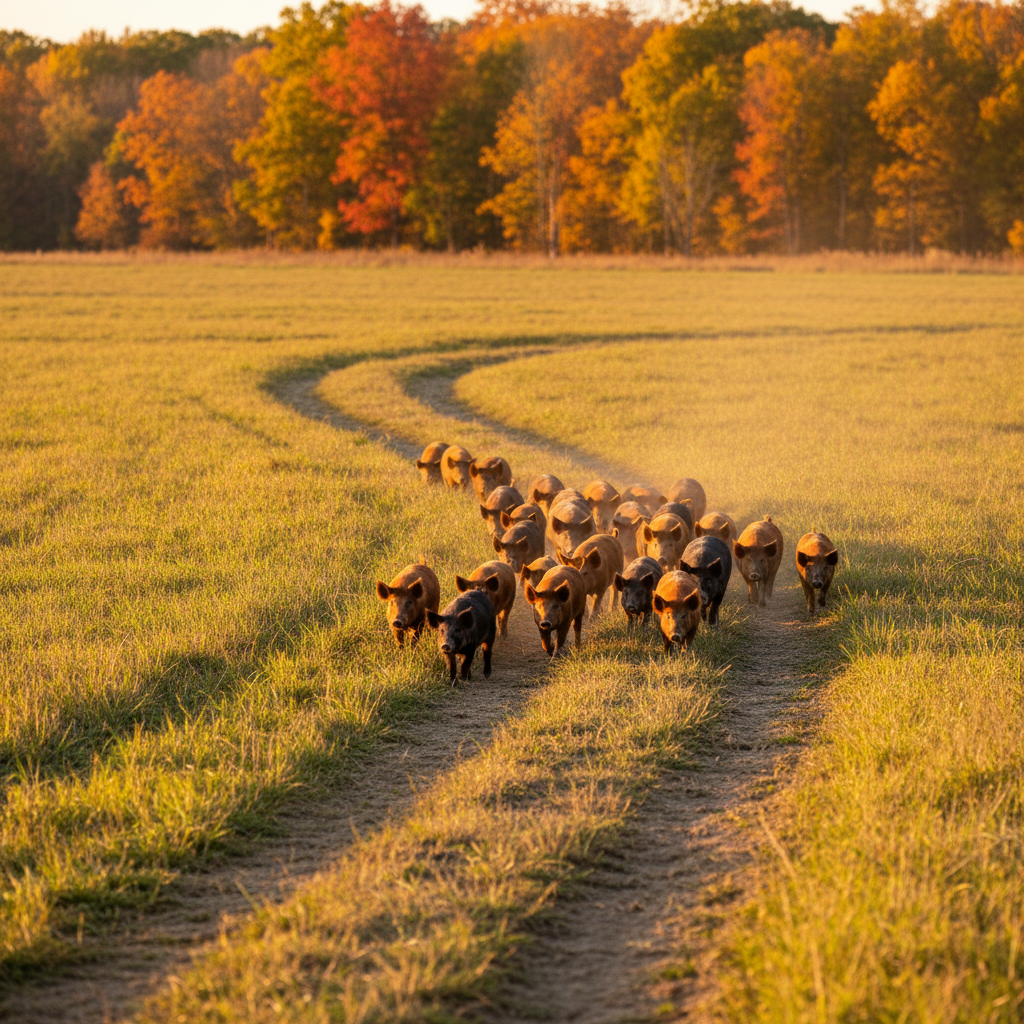
You've watched
the pig grow up.
By now you know the breed, the pasture, the feed, and the processor. The purchase isn't a transaction. It's a handshake.